

• PRODUCT CATEGORY
Veterinary
Otoscopes
Portable veterinary otoscopes and interchangeable visualization probes for routine ear, nasal and selected upper-airway examination.
• VETERINARY OTOSCOPY EQUIPMENT
One category.
Several access needs.
Veterinary otoscopes bring direct visualization to examinations where access, handling and image documentation matter.
Lumivet combines a handheld display platform with interchangeable probes designed around ear canals, nasal pathways and selected ENT access requirements. The category supports rapid point-of-care examination without requiring a full endoscopy tower for every case.
For clinical indications, examination pathways and procedural planning, continue to the Ear & Nasal Examination solution page.
• AVAILABLE PRODUCT
Portable visualization,
ready at the point of care.
One handheld platform with multiple probe configurations for focused veterinary ENT examination.
• PORTABLE OTOSCOPY & ENT
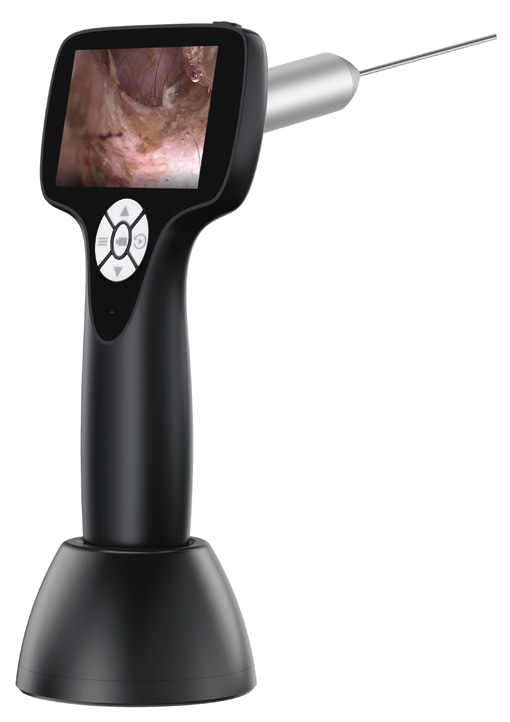
Veterinary Portable
Otoscope
An integrated 3-inch display, HD image capture and interchangeable probes bring visualization, documentation and external display options into one portable platform.
• PROBE CONFIGURATIONS
Match the probe
to the pathway.
Diameter, working length, direction of view and flexibility should follow the anatomy and examination objective.
01 / EAR
4.2 mm ear probe
30 mm working length and a wide field of view for routine otoscopy.
02 / NASAL
4.2 mm nasal probe
An 80 mm working length extends access for focused nasal examination.
03 / FLEXIBLE
Flexible ENT probe
A 175 mm flexible pathway for selected ENT and upper-airway access.
04 / ANGLED
3.0 mm angled probe
A 30-degree bend supports selected oral and sinus examination routes.
• HOW TO CHOOSE
Compare what changes
the examination.
The right veterinary otoscope is defined by the pathway, patient range, documentation need and how the device fits the clinic’s broader visualization setup.
01
Access and geometry
Compare probe diameter, working length, rigidity, angulation and field of view against the intended anatomy.
02
Image and documentation
Review image resolution, photo and video capture, storage capacity and output options for records and discussion.
03
Handling and workflow
Consider handheld balance, display position, changeover between probes and time required to prepare the device.
04
Cleaning and reuse
Confirm which components contact the patient and the validated cleaning approach required between examinations.
05
System compatibility
Decide whether the device will remain standalone or connect to external displays and a broader endoscopy workstation.
• PRODUCT VIEWS
See the platform
from more than one angle.
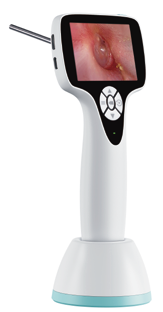
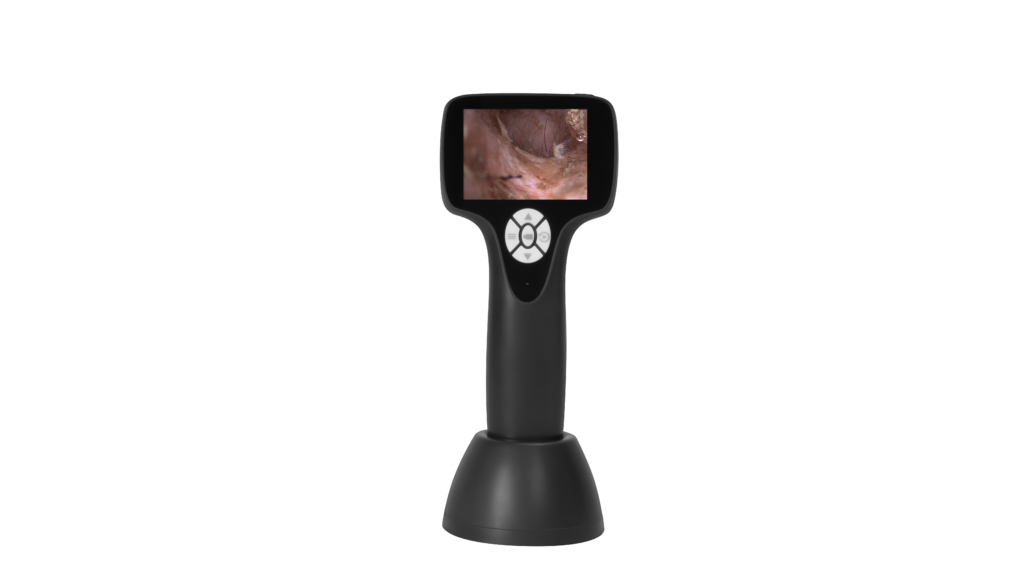
Product presentation should make the handheld format, display and probe options immediately understandable.
• RELATED CLINICAL SOLUTION
Plan the examination,
not only the device.
Explore veterinary otoscopy and rhinoscopy pathways, clinical questions, setup planning and system components for ear and nasal examination.