

BUYER GUIDE
Choosing a Veterinary Otoscope
A practical framework for comparing visualization, probe options, handling, documentation and support—without reducing the decision to one specification.
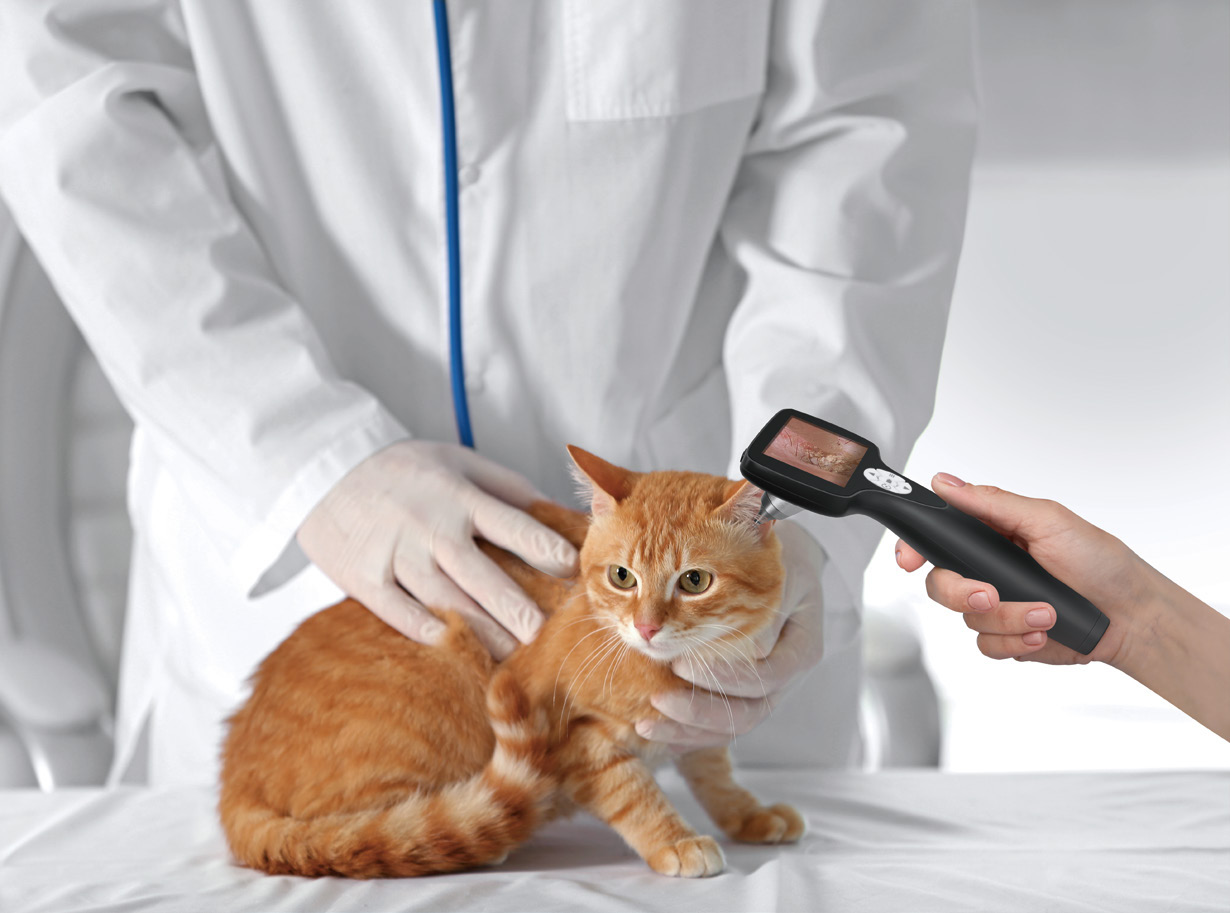
The right veterinary otoscope depends on the examinations your team performs, the animals you treat and how images need to be reviewed or shared. Start with the clinical workflow, then compare the device around that workflow.
1. Define the examination pathway
Routine ear examination, documentation of recurring disease and nasal assessment do not always require the same access, probe geometry or field of view. List the common cases first, including patient size and the need for sampling or retrieval.
Start with three questions
- Which species and patient sizes are examined most often?
- Is visualization sufficient, or is a working channel required?
- How will images be documented, reviewed and shared?
2. Compare what affects daily use
Image quality matters, but so do grip, control placement, probe interchange, cleaning steps, battery behaviour and compatibility with displays or documentation systems. A short hands-on evaluation often reveals more than a specification sheet alone.
3. Evaluate the complete ownership picture
Confirm what is included, what is optional and how consumables, replacement parts, onboarding and technical support are handled. For distributors, also confirm demonstration support, territory arrangements and the escalation route for clinical or service questions.
Continue your research
Explore Veterinary Otoscopes · Review Ear & Nasal Examination